
East African Community (EAC) citizens now receive full “gratis” status for the Kenyan Class R permit. The Government of Kenya has officially waived both the Security Bond and all government fees for eligible applicants. This means citizens of Burundi, the DRC, Rwanda, South Sudan, Tanzania and Uganda can now obtain and renew the Class R permit at no cost, except for the Alien Registration Fee, which still applies.

Which EAC Citizens Qualify for the Gratis Class R Permit?
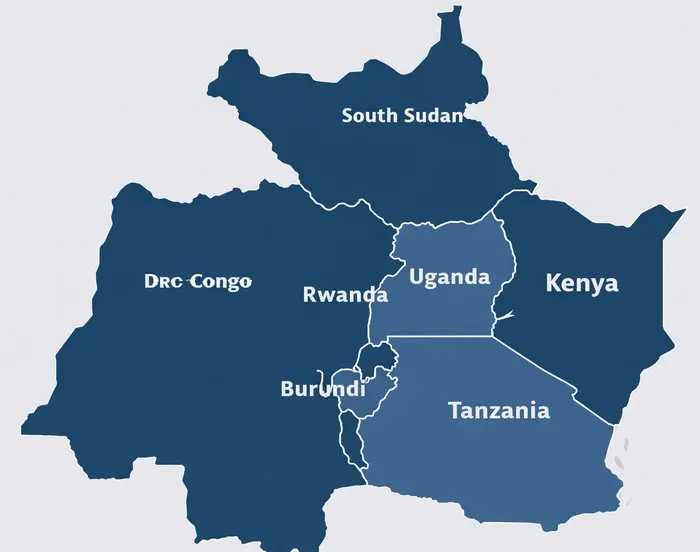
The Class R permit is available exclusively to citizens of the six East African Community member states: Burundi, the Democratic Republic of Congo, Rwanda, South Sudan, Tanzania, and Uganda. These nationals already benefit from regional mobility rights and now receive an even smoother immigration pathway through Kenya’s clarified “gratis” Class R framework.
What This Means for Regional Talent Mobility
The removal of the Security Bond eliminates one of the most confusing and cost-heavy components previously associated with the Class R process. Combined with the waiver of application, issuance, and renewal fees, Class R has effectively become a friction-free work-and-residence route for EAC professionals intending to live or work in Kenya. This significantly reduces financial and administrative barriers for qualified regional talent.
Hidden Costs: Why the Alien Registration Fee Still Matters
Despite the fee waivers, the Alien Registration Fee remains mandatory for all foreign nationals residing in Kenya. This requirement ensures lawful identification and compliance with Kenya’s immigration registry. For EAC citizens who intend to rely solely on the “zero cost” narrative, this is the remaining statutory cost that must be factored into compliance planning.
Expert Insight: Resolving Administrative Ambiguity
This update formally resolves long-standing confusion regarding the Security Bond requirement for Class R applicants. Previous uncertainty made the category appear inconsistent in practice. The Government’s clarification indicates a maturing approach to regional integration, reinforcing Kenya’s commitment to deeper EAC mobility and cooperation. This clarity stabilises employer expectations and improves predictability for cross-border human capital planning.
A Strategic Shift: Kenya Positions Itself as a Regional Talent Hub
This is more than a fee adjustment. By eliminating upfront financial hurdles, Kenya is signalling its intention to attract regional professionals, entrepreneurs, and specialists. A permit class that was once relatively underutilised can now scale into a high-impact regional mobility tool, aligning immigration policy with Kenya’s regional integration goals and workforce development priorities. The reform increases Kenya’s competitiveness among business travellers, remote workers and intra-EAC hires.
Clarification: Class R (EAC) vs Class D & G (Non–EAC)
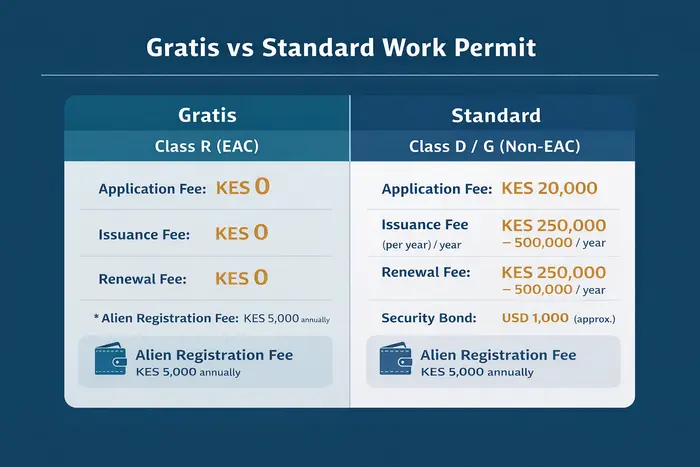
Kenya separates non-EAC applicants into Class D permits for employment and Class G permits for investors. At the same time, EAC citizens benefit from a single, streamlined Class R permit that covers both employment and investment, including the option to open their own company with all immigration fees waived, aside from the standard business registration costs.
Fee Classification – Class R (EAC)
EAC applicants for Class R Permits pay only the Alien Registration Fee of KES 5,000 annually. At the same time, all government immigration fees for applications, issuance and renewal are waived, no Security Bond is required, and company registration costs remain payable as regular business or registry fees.
Class D & Class G Permits (Non-EAC):
Class D – Employment
- Processing Fee: KES 20,000
- Issuance Fee (per year): KES 500,000
- Security Bond: USD 150
- Alien Registration Fee (per year): KES 5,000
Class G – Investor
- Processing Fee: KES 20,000
- Issuance Fee (per year): KES 250,000
- Security Bond: USD 150
- Alien Registration Fee (per year): KES 5,000
Compliance Guide: What EAC Applicants Should Prepare
Even with the new “gratis” status, applicants must still complete standard immigration steps:
• Valid EAC nationality passport.
• Supporting documents showing intended activity in Kenya.
• Alien Registration Fee payment (mandatory for all non-citizens).
• Accurate submissions to avoid penalties for misinformation under Kenyan immigration law.
Each requirement remains critical even after the financial burden of government fees is removed.
Why This Update Matters for Employers
Employers benefit from faster, simpler onboarding of regional hires. The removal of the Security Bond and permit fees directly reduces costs for businesses reliant on inter-EAC recruitment. Administrative overhead is also reduced, since the most error-prone requirement (the Security Bond) has been eliminated, lowering the risk of compliance delays and permit rejection.
Written by Tatjana Singh, Branch & Immigration Manager, Kenya